
After the Coalition’s Departure.. Can Iraq Manage Its Security Files Alone?
Al-Taj News –
Hammam Al-Freihat.
Al-Kinani to “Al-Taj”: ISIS Is Still Present.. and Iraq Faces New Security Challenges
Al-Kinani to “Al-Taj”: Cooperation Between Jordan, Iraq, and Syria Is Important to Strengthen Border Security
Iraqi political analyst Abdullah Al-Kinani said that ISIS remains present inside Iraq through sleeper cells, warning that the organization could take advantage of the departure of international coalition forces to carry out new operations, amid the end of the role previously played by coalition forces in providing intelligence and participating in targeting the organization.
Al-Kinani explained in an interview with “Al-Taj News” that the coming phase requires strengthening intelligence efforts and raising the level of readiness of Iraqi security forces to prevent ISIS from targeting civilians, security and civilian institutions, or crowded areas.
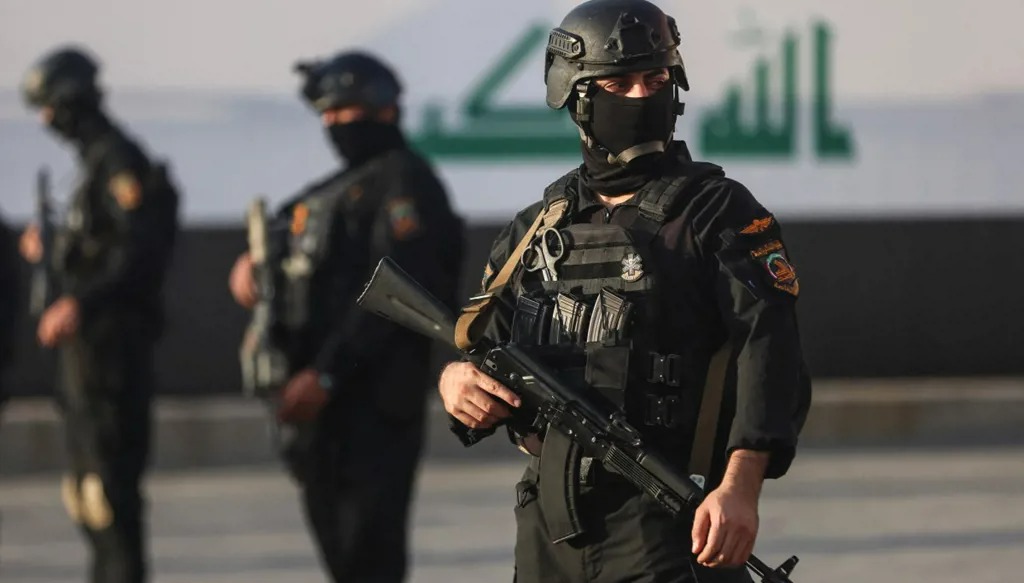
He noted that Iraqi forces have multiple military and security formations, including the army, police, border guards, Counter-Terrorism Service, and Popular Mobilization Forces, in addition to other security formations. He considered that unifying decision-making and command among these forces could enable Iraq to manage the security file effectively without support from the international coalition.
He added that ISIS no longer possesses the strength it once had, and that it relies more heavily on individuals who carry out limited operations and then flee, pointing to the decline of the support base on which the organization previously relied, along with limited external funding.
Al-Kinani stressed the importance of carrying out preemptive operations to pursue ISIS remnants, strengthening security deployment along Iraq’s borders, and preventing sleeper cells from reorganizing their ranks.
Iraq Between Iran and America
Regarding Iraq’s position between Iran and the United States, Al-Kinani said that Iraq can serve as a balancing ground between the two sides, provided that the decision remains Iraqi, and that the government works to take steps and measures to prevent Iraq from becoming an arena for conflict between Iran and the United States.
He explained that achieving this balance will not be easy, given Iraq’s relationship with the United States, in addition to the presence of armed factions and groups inside Iraq. He noted that reaching clear arrangements requires time, coordination, and dialogue between the government and these parties.
Factions and Weapons
Regarding the future of armed factions following the departure of coalition forces, Al-Kinani said that some factions may be prepared to hand over their weapons, while other parties may hold on to them until obtaining certain guarantees and arrangements.
He affirmed that weapons should be in the hands of the state, noting that the factions’ file could be addressed through negotiations, whether by integrating some of their members into security institutions or by providing guarantees and arrangements that ensure the transfer of the file into the framework of the state.
He highlighted the importance of the quadripartite committee tasked with following up on the issue of factional weapons, considering that the coming period may witness dialogue and organization of this file, particularly with the presence of approaches aimed at addressing the weapons issue away from confrontation.
Jordanian-Iraqi-Syrian Alliance
Regarding the possibility of forming an alliance between Jordan, Iraq, and Syria, Al-Kinani considered that security cooperation among the three countries is possible and important, particularly in light of the challenges related to border security and the pursuit of ISIS remnants.
He explained that such an alliance could focus on monitoring the borders and tracking ISIS remnants, contributing to maintaining the security of Jordan, Iraq, and Syria. He noted that the three countries share common interests in confronting cross-border threats.
He pointed out that Jordan is an Arab and Muslim neighboring country of Iraq and maintains close relations with it, noting that Jordan enjoys stability and possesses military and security capabilities, while Syria, according to his description, is going through a phase during which it needs support.
He added that Iraq possesses an army, security forces, and specialized agencies, which allows the three countries to cooperate in confronting ISIS remnants and strengthening border security.
Al-Kinani affirmed that any alliance of this kind must serve the three countries and must not affect the powers of the Iraqi government, stressing that the decision of war and peace remains in the hands of the Iraqi government and parliament.
Al-Kinani concluded his remarks to “Al-Taj” by saying that the coming phase requires a unified security decision and greater coordination between Iraq, Jordan, and Syria, particularly in light of the challenges related to terrorism and border security.